What a Spring AC Tune-Up Actually Checks
A tune-up is a checklist worked in order, and knowing the list helps you tell a real one from a quick glance at the outdoor unit.
October 20, 2026 · 4 min read
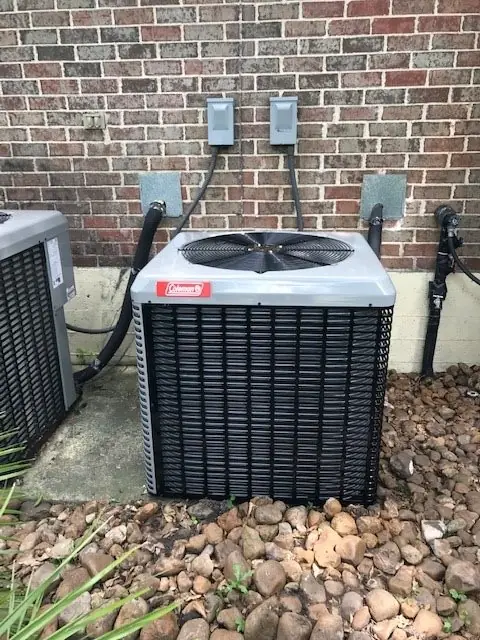
Every spring, around the first muggy week in Tomball, the phones get busy with people whose air conditioner either won't start or runs all day and never catches up. A good share of those calls could have been a quiet visit in March or April. That's what a tune-up is for. It isn't a magic wand, and it isn't a technician glancing at the outdoor unit and handing you a bill. It's a checklist, worked in order, on the parts of a system that wear out or get dirty. Here's what's on it and why each item earns its spot.
Start with the electrical side
The first things a technician looks at aren't the pretty parts. They check the electrical wiring, tighten terminals, and measure the supply voltage coming into the unit. Loose terminals are one of the most ordinary causes of a hard start or a burned contactor, and they loosen because the system heats up and cools down hundreds of times a season. Tightening a screw costs nothing. Replacing a fried part in July costs a lot more, and you'll be doing it in the heat.
From there the technician measures amp draw on the compressor and the blower. Think of it like taking a pulse. A compressor pulling more current than it should is telling you something is wrong long before it quits. A blower motor working too hard usually points to a dirty wheel, a tired bearing or a clogged filter. Those readings are the earliest warning you get, and you only get them if somebody puts a meter on the system.
The coils, where the real work happens
An air conditioner doesn't make cold. It moves heat out of your house, and it does that through two coils. The evaporator coil sits inside, on the air handler or above the furnace, and it pulls heat and moisture out of the air passing over it. The condensing coil sits in the outdoor unit and throws that heat outside. If either coil is coated in grime, the system has to work harder to do the same job, and in a Houston summer it may never quite win.
The outdoor coil gets a water clean as part of the visit. Grass clippings, cottony seed fluff, pollen and road dust pack into the fins over a season, and you can't see most of it from the yard. The indoor coil gets inspected too. If it's dirty, the technician will tell you what they found and what cleaning it involves, so you're not guessing.
The condensate drain, the quiet troublemaker
In our humidity, a running air conditioner pulls a surprising amount of water out of the air. That water drips into a pan and leaves through a drain line. Over a season that line grows slime and algae, and sooner or later it can clog. When it does, the pan fills and the water goes wherever it can, which is often a ceiling, a closet floor or a wall. Checking the condensate drain is on the list because a clog is cheap to clear before it backs up and expensive to clean up after.
Refrigerant, line set and the little valves
Your system runs on a sealed loop of refrigerant. Sealed means it shouldn't ever run low. If the level is down, there's a leak somewhere, and adding more without finding it just starts a repeating bill. So the tune-up includes checking the refrigerant level, looking over the line set that runs between the indoor and outdoor units, and checking the Schrader valves, the small tire-style valves where gauges connect, since those can weep over time.
A tune-up won't turn a leaky system into a tight one, but it will find the problem while you still have choices. Maybe it's a small repair. Maybe it tells you the system is reaching the end of its life and you have time to plan instead of scrambling in a heat wave.
Air movement: filters, blower, fan and ducts
Cooling is only half the story. The cold has to travel. The technician checks the filter, the blower wheel, and the balance and rotation of the condensing fan. A blower wheel caked with dust moves less air even though the motor sounds fine. A fan that's out of balance shakes itself and its bearings apart over time. They also look for air leaks and for mildew in the ductwork, because ducts that sweat or leak can undo a lot of good work at the unit.
Last, the thermostat settings get checked against what the system is actually doing. It's amazing how many comfort complaints come down to a setting or a sensor, not a failed part.
What the $89 visit is, and what comes after
Mr. Chill's residential AC tune-up is $89, and it works through a published checklist covering the items above and more. You come away knowing what was checked, what the readings were and whether anything needs attention. One Chill Club member, Evelyn Grevelle, put it this way in her Google review: “he is very thorough when checking everything out, he is polite and gives you a comprehensive report when he is finished.” That report is the point. A tune-up you can't read afterward is just a visit.
If you'd rather not think about it each year, the Chill Club is $179 a year, with a cooling tune-up in spring and a heating tune-up in fall, plus $99 for each additional unit at the same location. To book a tune-up, call (832) 698-4273. The office is open Monday through Saturday, 6:30 AM to 7 PM, and se habla español.
Mr. Chill Heating & Air, Inc., (832) 698-4273
Call (832) 698-4273More articles
Why the Back Bedroom of a Manufactured Home Runs Hot
It usually isn't your thermostat or your air conditioner. It's the way air has to travel down a long, narrow house.
Repair or Replace an Aging AC in the Houston Heat
The honest answer depends on a few things you can check yourself before anyone sends you a quote.