Why the Back Bedroom of a Manufactured Home Runs Hot
It usually isn't your thermostat or your air conditioner. It's the way air has to travel down a long, narrow house.
October 20, 2026 · 4 min read
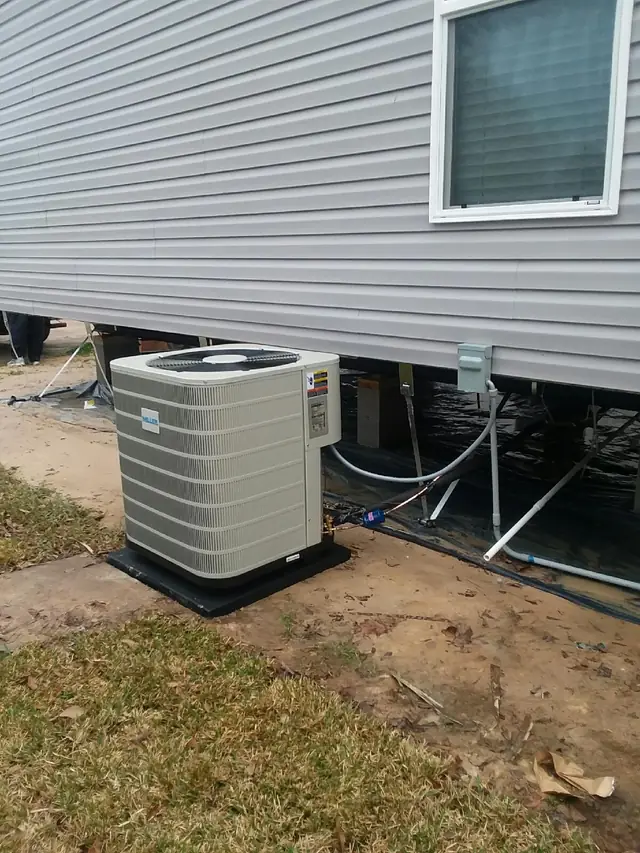
If you live in a manufactured or mobile home, you probably know this room. It's the one at the far end, usually a bedroom, where the air feels warm and a little stale no matter where you set the thermostat. You've tried a box fan. You've tried closing the other vents. The air conditioner runs, the front of the house is fine, and the back bedroom still feels like an afterthought. The good news is this is one of the most common problems in factory-built homes, and it has understandable causes.
One long trunk, a lot of distance
Most factory-built homes are built long and narrow. The air handler sits near one end, and a single main duct, called a trunk line, runs down the length of the floor or ceiling. Smaller branches peel off to each room. The first rooms along the trunk get strong airflow. By the time the air reaches the last branch, there's less pressure left, the duct has leaked a little along the way, and it has picked up heat from the space around it.
That's why the far bedroom starves. It isn't that the air conditioner is too small, though that can happen too. It's that the air has a long trip and the room at the end of it gets whatever's left. A single trunk with no balancing can't fix that on its own.
Return air is half of the airflow
Air has to come back to the system as well as go out to the rooms. Many manufactured homes have one return, often a single grille in a hallway or near the equipment. When you close a bedroom door at night, that room's supply vent keeps pushing air in, but it has no easy way back out. The room pressurizes a little, the supply slows down, and warm air from the rest of the house stays put.
Adding return-air vents is one of the most effective changes in these homes, and one of the most overlooked. Giving air a path back from the far rooms lets the supply side do its job. It's less glamorous than a new unit, but it often changes how the whole house feels.
Leaky ducts waste the cooling you paid for
Ducts in factory-built homes live in tight, hot spaces, under the floor or in the roof cavity, and the joints loosen over the years. Every leak is cooled air going somewhere it doesn't help you. Duct sealing and duct repair are often the first thing to look at before spending money on equipment, because there's no point sending more cold air down a trunk that spills it before it gets to the bedroom.
Older homes can have another issue. Homes built before June 1976, before the federal HUD Code took effect, were built to different standards than later ones. Their ductwork, insulation and equipment space can look quite different, so the right approach for a pre-1976 mobile home isn't automatically the right one for a HUD Code home built afterward.
Sizing for a long floor plan
Sizing a system for a manufactured home isn't just a matter of square footage. A long, narrow floor plan with lots of exterior wall, windows on both sides and a thin envelope behaves differently from a square house of the same size. An oversized unit can cool the thermostat's location quickly and shut off before the far room has caught up. An undersized one runs forever. Getting the equipment right means looking at the layout, the ducts and the return paths together, not matching a number from the old nameplate.
Moisture in a tighter house
Greater Houston is humid, and a tight, small house holds that moisture. If the air conditioner is cycling on and off too fast, it cools the air without pulling much water out of it, and the house feels clammy even at a decent temperature. Good airflow, proper sizing and sealed ducts all help the system run long enough to dry the air, which is a big part of feeling comfortable, not just a lower number on the thermostat.
What the fix usually looks like
Rather than guess, a technician who works on factory-built homes will look at the whole path the air takes. Common fixes include:
- Sealing and repairing the supply ducts so the air arrives at the far room instead of leaking along the way.
- Adding return-air vents so closed doors and far rooms can breathe.
- Checking whether the equipment is sized for the length and layout of the floor plan.
- Looking at moisture control, since a humid house feels warm even when the thermostat says otherwise.
Mr. Chill Heating & Air, Inc. does this work on mobile, manufactured and modular homes across Greater Houston and the Dallas-Fort Worth Metroplex, plus the rural areas around them, which is a much wider radius than the company's regular service area for site-built homes. A customer named Ismael Perez wrote in his Google review, “This young man did a great job in installing our AC system.” If your back bedroom has been the problem room for years, call (832) 698-4273 and ask about a visit. Free estimates on new systems, and se habla español.
Mr. Chill Heating & Air, Inc., (832) 698-4273
Call (832) 698-4273More articles
What a Spring AC Tune-Up Actually Checks
A tune-up is a checklist worked in order, and knowing the list helps you tell a real one from a quick glance at the outdoor unit.
Repair or Replace an Aging AC in the Houston Heat
The honest answer depends on a few things you can check yourself before anyone sends you a quote.