The Fall Heating Check Before the First Cold Front
Your furnace sits idle for most of the year in Texas, so the first cold morning is a bad time to find out what's wrong with it.
October 20, 2026 · 4 min read
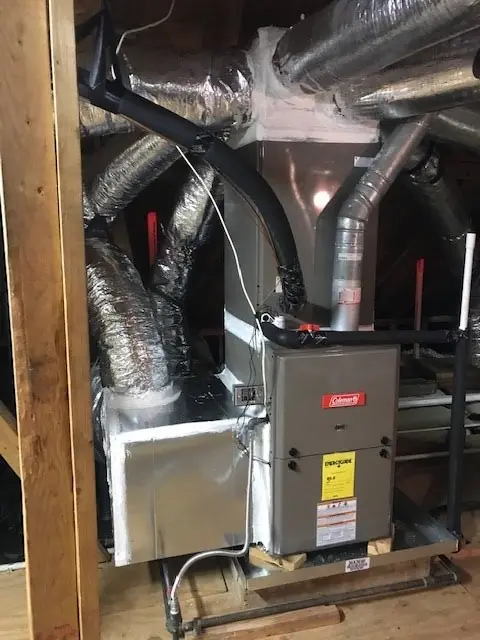
In this part of Texas, a heating system has an odd life. It sits silent through the long hot months, then gets asked to work hard on the first cold morning of the year, when everybody else's furnace is starting up too. That's the worst possible time to learn something is wrong. A fall heating check, done before the first real cold front, is how you find out on your own schedule. Here's what a technician actually goes through.
The heat exchanger comes first
In a gas furnace, the burners fire inside a sealed metal chamber called the heat exchanger. The air for your house passes over the outside of it and picks up the heat. The metal expands and contracts every time the furnace cycles, and over the years it can crack. Looking for heat exchanger cracks is the first item on the heating checklist for a reason. A crack isn't something to run another season on. If a technician finds one, that's a conversation about your options, not a footnote.
It's also the kind of thing you can't judge from the living room. The furnace may run and warm the house just fine while a problem develops inside it, which is exactly why it gets checked on a schedule and not only when something seems off.
Burners, ignition and the inducer
Next come the burners. After a summer sitting idle, burners collect dust, lint and scale, and that affects how cleanly they light and burn. A technician inspects them for buildup and cleans what needs cleaning. They also check the burner ignition and the spark ignition controls, which are what actually start the flame each cycle. If an igniter is weak, the furnace may fail to light on a cold morning, and it might be fine again by afternoon, which makes it a maddening problem to chase.
The inducer draft motor is the fan that pulls combustion gases through the furnace and out the vent. If it's worn or struggling, the furnace is supposed to shut itself down. A motorized vent damper, on systems that have one, opens and closes the flue path, and that needs to move freely and confirm it's open before the burners fire. These are parts you never think about until one sticks.
The safety controls, tested on purpose
A furnace has built-in protections, and the fall check makes sure they still work. The limit switch watches the temperature inside the furnace and shuts the burners off if it gets too hot, which can happen when airflow is restricted. The safety lockout is the system's way of stopping itself after a failed ignition instead of repeating the attempt over and over. A technician checks that these respond the way they should, because a safety device you've never tested is a safety device you're hoping about.
Airflow and temperature rise
The furnace also depends on a good flow of air across it. The technician checks the blower bearings and the blower itself, since a worn bearing means a noisy, struggling fan and less air through the house. Then comes temperature rise, which is the difference between the air entering the furnace and the air leaving it. It's one of the best single measurements of whether the furnace and the ducts are working together. A reading that's off can point to a dirty filter, a blocked duct or a blower problem.
For homes with a heat pump or electric heat, the check covers the heat strips, measuring the amp draw on them to confirm they're pulling what they should. Those strips don't run all summer either, so you want to know they work before the cold arrives.
What you can do before the visit
- Replace the air filter. A clogged one is the most common reason a furnace struggles.
- Clear stuff away from around the furnace and from the supply and return vents.
- Turn the thermostat to heat on a mild day and listen. Note any odd smells, noises or delays and tell the technician.
That last one is worth doing early. If it lights, runs and warms the house on a mild October afternoon, good. If it doesn't, you've found out when the weather is still forgiving.
Fall tune-ups and the Chill Club
Mr. Chill's heating tune-up follows a published checklist that includes everything above. If you're a Chill Club member, it's already included: the membership is $179 a year, plus $99 for each additional unit at the same location, and it covers a cooling tune-up in spring and a heating tune-up in fall, along with priority service, 10% off repairs, additions and cleans, no service call fee with a repair, and a 2 year warranty on any parts replacement.
Tracy Scott, a customer, wrote in her Google review that “It's reassuring, that there's no high turnover for employees and that they are consistent and dependable.” That consistency is what you want from someone looking at your furnace each fall. To schedule your heating check before the first cold front, call (832) 698-4273. The office is open Monday through Saturday, 6:30 AM to 7 PM, and se habla español.
Mr. Chill Heating & Air, Inc., (832) 698-4273
Call (832) 698-4273More articles
What a Spring AC Tune-Up Actually Checks
A tune-up is a checklist worked in order, and knowing the list helps you tell a real one from a quick glance at the outdoor unit.
Why the Back Bedroom of a Manufactured Home Runs Hot
It usually isn't your thermostat or your air conditioner. It's the way air has to travel down a long, narrow house.